
This book is fantastic. Go read it if you haven’t. That’s all.
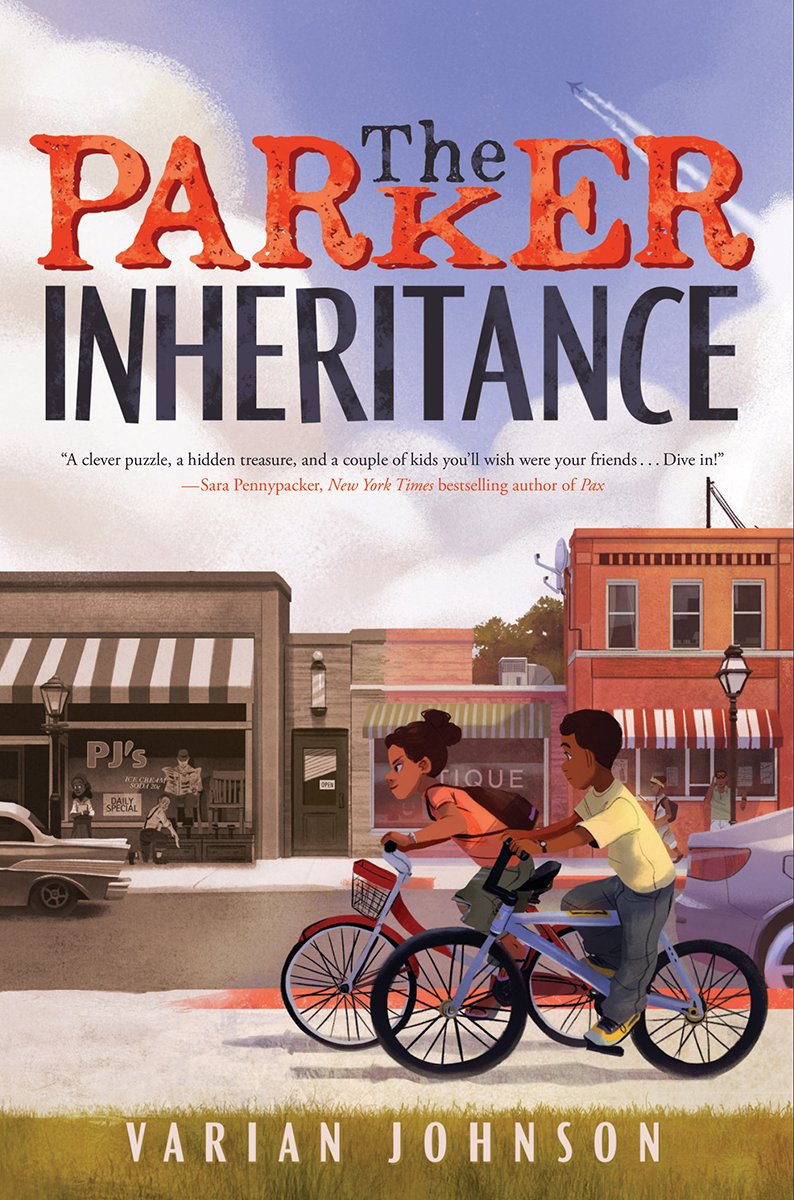
Well since you’re still here, I guess I should explain. Varian Johnson’s The Parker Inheritance is a mystery novel that links events of the past with the present. Most of the characters in the book are Black, and have a variety of personalities and traits, successfully avoiding many of the common stereotypes. The book also deals with intense topics like racism (and how it has changed over time), gender, family structures, and gender roles. These are all very relevant topics today that need to be exposed to children, and this book does so in an approachable way.
Over the past few weeks, we have been reading books like Crenshaw that deals with poverty, A Crack in the Sea filled with stories from refugees, and Wishtree that revolves around immigration. Not only do these books have engaging stories and extremely relevant topics, but the characters in the stories are wonderfully diverse.
I remember when I was growing up that most of the books I read and that were available to me were all about white people. Every now and then a character was thrown in to add some diversity to the cast, or the class library had a couple books about brown people. But these were all just extras. They weren’t important.
But these books are important. I was essentially told through what was available to me, that the stories, lives, and existence of people of color were not important. While I did not fully believe this, it certainly had an impact on me. Exposure is critical, for both people of color and not. Books like these affirm that the stories within them are valuable, and the people are real, and important. I am extremely pleased that the number of “non-white” books and characters are increasing, because awareness is increasing with it.
I also really enjoyed this book because of the history behind it. While the story and its characters are fiction, the story of the times and situations is not. Today, it is easy to look back at the 1950s and 60s and see them as detached, especially for younger people. It is very easy to view those times as separate from what we are living now. I’ve found that this is a problem for a lot of history, but this book helps the reader see past that.
The book does a wonderful job of tying the two threads together. The reader sees this history, and by extension our history, on a continuum rather than a series of unconnected points on a timeline. This is incredibly important. When events are not connected, it is harder to see how they influence each other. It is easy to look at our current day and say “racism is gone!”. But it isn’t. The 1950s and 60s were 60ish years ago. People still remember those times. People from both sides of the conflict, and people don’t change easily. People definitely still remember the decades after, and are bringing all of those memories into the current day.
“Know your history so you don’t repeat it” is a good piece of advice, and a warning. This book helps the reader understand that.
Sources:
Johnson, V. (2018). The Parker inheritance. New York, NY: Arthur A. Levine Books, an imprint of Scholastic.
 Lazy Reads and Thoughts
Your whole last paragraph…yes! And talking about the importance of having the events (both fictionalized and historical) laid out on a timeline and woven together really does help to bring the importance of it all further into the foreground and making it even more tangible and real.
I feel like in our history classes in public education we were jumping around throughout history in every class and in ever grade. It made it so much harder to understand what was going on. If they taught history in a woven timeline, I probably would have gotten more out of those classes and understood more about the implications of past events.
LikeLiked by 1 person
Thanks for the feedback! I have not finished the post yet so I appreciate that you could find something worth commenting on within the little that I had posted 🙂 And I agree about history. It would make the subject A LOT more interesting. I have always liked history so I managed to make my way through it in school regardless of hos it was taught, but I understand why so many people didn’t.
LikeLike