
This week’s readings very clearly deal with a lot of the themes of the past few weeks such as diversity, racism, and acceptance. The books I read were Separate is Never Equal by Duncan Tonatiuh, and One Last Word by Nikki Grimes.
I first read Separate is Never Equal, and I thought going into it that it would be about the black civil rights movement in the South. I was pleasantly surprised however, to learn that it was actually about a group of Hispanic families that used the legal system to desegregate the public schools in California. This took place a few years before the Brown v. Board of Education case that achieved the same thing in the South.

I really enjoyed this book because it isn’t just a children’s book with a good message. The author and illustrator is a Latino man who illustrated the book using the old meso-american art styles that are a part of his heritage. Plus the book is telling an important story that many people (myself included) are probably not aware of. And this is a powerful thing. Here in America, we focus a lot on the painful and horrific past of White and Black relations. This is a good thing because we still need to get over it. But we can only really focus on one issue at a time. While we are trying to heal the deep wounds inflicted onto one people group, the others that have experienced similar things are largely ignored. People groups such as the Indigenous peoples, Mexicans, Japanese, Chinese, and any others, are forced to wait and go through the triage process.
This book is an example of counter-story telling both in its actual story (which is a biography of one of the children involved in the case), but also in the fact that the words “Separate is never equal” are usually associated with the black struggles in the South. It serves as a reminder that a LOT of people experienced suffering at the hands of racism throughout our history. And the fact that this book is a picture book does not take away from that fact.
The illustrations in this book are superb, and even though they are often fairly minimalist and “simple”, they are extremely interesting and help make the characters real. The book primarily has characters of Hispanic or Latino descent, and so the book is illustrated in their culturally historical style.

One of the tasks for this week was to select an illustration that the author uses to highlight the racism of the story. I chose page 17 that depicts the Mendez family reaching out to other Hispanic families to join their cause. In the picture, a family is seen walking away from their offer fearing trouble from their White employers. Not only is this a sad image, but it is/was a sad reality. What the family fears is a very real possibility. However, the silver lining is that the children are looking back towards the Mendez family over their shoulders as they are walking away. The children want to join and help and do whatever they can.
We were also supposed to pick an illustration that refuted the negatives of the other illustration, and show how the Mendez family overcame with the help of others. I chose page 20 which depicts the Mendez family meeting Mr. Marcus, a lawyer who is willing to help them with their case. On the next page is shows Mrs. Mendez driving a tractor and taking care of the farm since Mr. Mendez is on the road practically all day organizing and rallying support for the case. I chose these illustrations because it shows that the legal system that we have in this country can do a lot of good. Not all the time, but it’s better than a lot of other places in the world.

Additionally, Mrs. Mendez running the farm and doing things herself is very reminiscent of what happened during both World Wars when a significant amount of our young men went off to fight, die, and kill across the globe. Worthy cause or not, the result was the same: women became dominant in a lot of areas of life. And this was not limited to white women. Tens, if not hundreds, of thousands of Black and Latino men fought for the U.S. in both world wars. The same effects that happened in white families often happened with minorities as well. These illustrations show us that making things change requires the help of others. The burden is too great to carry alone.
The people involved with the Harlem Renaissance knew this well. They worked to bring people together and help each other through hard times. One Last Word is a collection of poems by Nikki Grimes. In it, she took a variety of poems from poets of the Harlem Renassiance and created new poems based off of their words using the “golden shovel” technique. This technique takes an excerpt from a poem, and uses each word as the final word of each line in the new poem. An example would be taking “Within the stardust and anchors, we sit among the rust” (written by me) from a poem, and writing a new poem where the final words in each line would be:
…. within
…. the
….. stardust
….. and
….. anchors
etc.
I find this technique to be very interesting because I like poetry that requires the author to follow some sort of rule or restriction. I feel that it takes more talent to create something that is well-crafted and makes sense when limited rather than being able to freely write. However, because the lines have to end in specific words that often shouldn’t be at the end of lines, I do not like reading these kinds of poems. I like poetry and hip hop music because I enjoy clever word play that also sounds good. I found that a lot of the poems in the book were hard for me to read. I enjoyed a few, but overall I enjoyed the original poems that Nikki Grimes used far more than her own work.
However, there was one of hers that I really loved. It was “A Dark Date For Josh”. I enjoyed this poem because I felt that it still maintained a lot of the rhythm and cadence that I enjoy from poetry, but also because it is very personal for me. First of all, my name is Josh, but I am also in a relationship with a black woman. I have lived through some of the things I read in this poem. While my parents were not bothered in the slightest about the relationship, her mother took some convincing because of her histories with both white people and men.
I also see the generational divide towards both of the relationships in real life. I understand fictional Josh’s mother’s reaction, and Josh’s confusion. She is not upset because she is black, she is worried about what might happen to them because she’s black. As far as I can see, the younger generations are moving quickly from the problematic ways of our forebears, but the world has not yet entirely caught up.
There have been a few occasions while out in public with my partner where I was preparing myself to get us out of a potentially hostile situation. I am also convinced that the main reason the situation didn’t happen is because I am a fairly fit 250 pound male. While the barriers that we have experienced (and she has experienced more than I ever will) are significantly fewer than 10, 20, or 50 years ago, they still exist, which is why Josh’s mother was upset. In the end however, I decided I loved the poem at the last line “The prom is more like a test run for my heart. It’s – a start.” A start for changing the world and what it accepts.
Overall, I think that this book, and this poem in particular (for me at least), is incredibly important and relevant to our society today. The book is full of poems about black beauty, pride, feminism, female beauty, and female pride. These are the same messages that we were being spread almost 100 years ago, and we still need to spread them. That’s why this book is another example of counter story telling. One phrase that I hear fairly frequently but despise is “you’re pretty!… for a black girl”. We need to start dropping the clause off the end of this shit. People of every color need to be told that they are beautiful the way they are and that they matter.
Doing this will have two effects (I believe). The first is that people of color are told that they are beautiful and matter. This is an important message for self-esteem and community healing. The second is that the more voices we incorporate into our society, the less white people will feel entitled and expectant of dominance. They will start being able to share the spotlight, power, and voice in our country. I can’t wait to see that happen.
I know that this post has been very long, but I have included my own poem in the golden shovel style. The first poem here is the original poem (written by myself) with the excerpted lines in italics. Enjoy!
“Secret Racism”
God bless their hearts,
Those keepers of the secret racism.
They are blind to reality
Strutting about in their own fantasy,
Explaining their status in life
With “good luck and hard work.”
They tread on the lesser as they go to work
While their mind denies the truth of their hearts:
That their skin has given them their life.
They say “it has been dealt with, this racism”
But that is only true in their fantasy.
A world with them on top, undeniably, is the reality.
They avoid talking about this reality
Because to acknowledge it is too much work.
So they live on in their fantasy
Ignoring the truth of their hearts.
Deep down they know that this evil exists, this racism
But they pretend, because change would affect their life.
They thank the Lord Almighty, their Savior, for their life,
But not their skin which is powerful in this reality.
As a demon hates the light, they hate the word “racism”
Because it is everywhere, it has even invaded their work.
They push down that annoying truth in their hearts
Because it interferes so heavily with their fantasy.
They live their fantasy
Clueless to the facts of life,
Ignoring the truth in their hearts
And shunning our reality.
Because it would be too much work
To change and destroy racism.
Life is great for the keepers of the secret racism
Living away from everything, deep in their fantasy.
It’s not worth it to them, too much work
To change, to make a difference in their life.
They are too lazy and blind to accept reality
And give themselves to the truth in their hearts.
These keepers of the secret racism avoid the truth in their life,
They work to silence the voices of the truth in their hearts,
But in reality, this secret is only a secret to those deluded by fantasy.
The following is my golden shovel poem
“Passing the Torch”



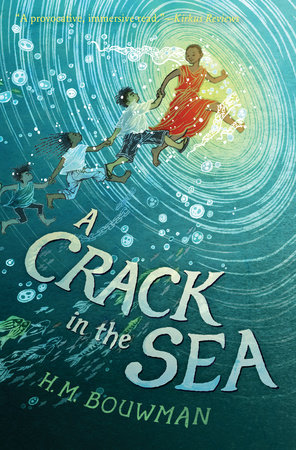 The story is set in a magical version of ours containing “doorways” within storms at sea that lead to the “second world”. In this world, the seawater is sweet and safe to drink, the seafloor is almost always within sight, only a few islands exist, and some individuals have magical “gifts”. These gifts also exist in our world, but are often stronger in the second world. Two nations exist here: Tathenn on the islands and Raftworld which travels the water and is made up of rafts.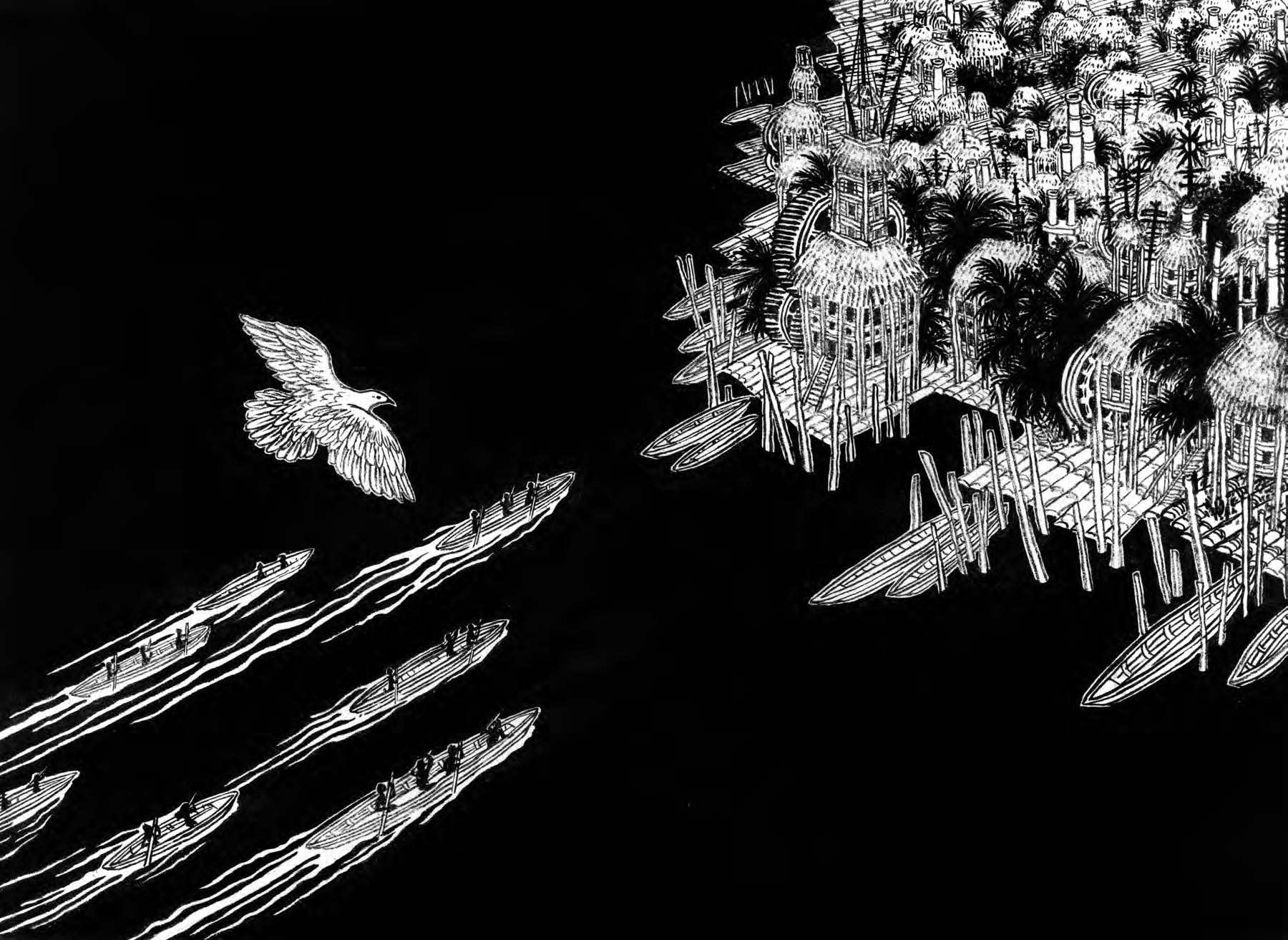


 Lazy Reads and Thoughts